Posted by cenwan cenwan
Wed at 9:05 PM
Filed in Other
#Folder Gluer
8 views
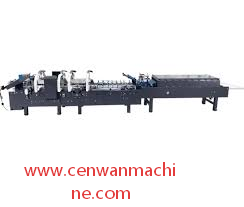
Production efficiency in carton manufacturing is not determined by one movement or one machine setting. It develops through the coordination of feeding, alignment, folding, adhesive application, pressing, inspection, and finished carton handling. When these stages depend heavily on separate manual operations, every transfer can interrupt the production rhythm and introduce variation between workers or production periods. A Folder Gluer gives these connected tasks a mechanical sequence, allowing flat carton blanks to travel through several processing stages without requiring each operation to be completed independently. Cenwanmachine develops folding and gluing equipment for different carton applications, including systems designed around automatic feeding, positioning, folding, gluing, and forming. With this kind of connected process, how can carton manufacturers improve production efficiency without relying entirely on repetitive manual handling?
One of the first efficiency gains comes from feeding. Before folding can take place, each blank needs to enter the working area in a suitable position. Manual feeding can involve repeated lifting, positioning, and releasing of sheets, and the pace may vary according to the operator and the condition of the material. An automated feeder establishes a continuous material flow and gives the following sections a consistent starting point. CenWan's manufacturing information describes an automatic feeding section with an independent servo drive and adjustable components intended to support stable paper movement. This matters because later folding and gluing operations are closely connected to the position established at the beginning of the line.
Alignment is another part of the process that has a direct relationship with output consistency. A carton blank that enters at an unsuitable angle can carry that deviation into the folding section, where panel positions may no longer correspond accurately with the original crease pattern. An automatic calibration section can provide a controlled path before the blank reaches the main folding area. CenWan's published manufacturing information describes individually adjustable side gauges and a guiding arrangement intended to keep the paper aligned during conveying. When the starting position remains stable, operators can spend less time correcting small deviations by hand, while the folding mechanisms receive material in a condition suitable for the next stage.
Folding itself involves several coordinated movements, especially when a carton contains multiple panels or a particular structural design. A blank may need to pass through pre-folding areas before the principal folding operation brings the panels toward their final positions. If each movement is performed manually, the rhythm can become difficult to maintain during a long production run. Automated folding mechanisms repeat the programmed movement while the carton continues through the line, creating a process in which the material and machinery move according to an established sequence. CenWan's product range includes machines for straight-line boxes, lock-bottom structures, and four or six corner applications, allowing equipment selection to correspond with different carton designs.
Adhesive application also has an important place in production efficiency because the glue stage must correspond with the folding sequence. If adhesive is placed away from its intended area, the finished seam may not form correctly, which can result in inspection work, reprocessing, or rejected cartons. Automated adhesive systems allow application to take place as the carton travels through the production path rather than requiring a separate manual gluing operation. CenWan's published equipment information includes white latex glue systems on selected machines, while certain configurations can also be adapted according to carton requirements. The practical value comes from keeping material movement, glue placement, folding, and panel contact within one coordinated sequence.
Pressing after folding provides another connection between machine operation and production flow. Once adhesive has been applied and the panels have reached their intended position, pressure helps maintain contact while the joint develops. If cartons have to be manually held or arranged after gluing, the production rhythm can slow and the handling process becomes dependent on additional workers. An integrated conveying and pressing section allows cartons to continue through the line after folding, reducing the need for separate manual intervention. The result is not simply faster movement, but a production route in which several related tasks are handled in sequence.
Automation can also change how operators spend their working time. Instead of repeatedly folding individual cartons, applying adhesive, and manually guiding each package, personnel can focus on feeding materials, observing machine conditions, checking finished cartons, making required adjustments, and responding to production changes. CenWan's published material describes automated feeding, folding, gluing, and delivery as connected functions, while its product pages describe automatic continuous feeding on selected machines. This division of responsibilities allows human attention to move toward supervision and process control rather than constant repetition.
Material handling is another area where an integrated production line can influence efficiency. Every time a carton blank is transferred from one independent station to another, there is an opportunity for stacking, alignment, handling, or temporary storage to interrupt the flow. An integrated system keeps the blank moving through consecutive operations, which can reduce unnecessary transfers between separate workstations. CenWan's fully automatic dual-channel production line, for example, combines die cutting, folding, gluing, conveying, counting, and packing-related functions within one connected process. Its published description specifically highlights the elimination of intermediate transfers and the use of two channels for simultaneous gluing and folding. Such an arrangement shows how production efficiency can involve process organization as well as machine movement.
Production stability also matters when evaluating efficiency. A machine that moves quickly but requires frequent manual correction may not provide a smooth production rhythm. Consistent feeding, controlled folding, accurate adhesive application, and regular inspection work together to keep the process within the intended operating range. When an abnormal carton appears, operators can inspect the relevant section instead of treating the entire line as a single unexplained problem. CenWan's product information describes servo-driven feeding on selected models and includes features such as glue detection and rejection as optional functions for certain configurations. These features can help connect production monitoring with the physical movement of cartons through the line.
Changeover is another factor that should be considered because efficiency does not only refer to the period when a machine is running. A packaging factory may need to process cartons with different dimensions, materials, crease patterns, or structural arrangements. During a product change, operators may need to adjust guides, folding elements, glue positions, or other components. The time required for this preparation can affect the usable production period, particularly when orders involve frequent format changes. For this reason, equipment should be evaluated according to the actual carton portfolio rather than a single headline specification. A machine intended for a narrow range of products may have a different operating profile from one configured around varied carton structures.
Material condition can also influence production rhythm. Paperboard that is curled, warped, dusty, or unevenly stacked may not behave in the same way as clean and flat material. Feeding problems can then create downstream folding or gluing variations. Operators therefore still have an important role even in a highly automated line because automation does not remove the need for material inspection, machine cleaning, setup checks, and process observation. Instead, it changes the type of work being performed. Personnel can concentrate on keeping the production conditions suitable while the equipment handles repeated mechanical actions.
Maintenance has a similar connection with efficiency. Adhesive residue and paper dust can accumulate around working components, belts, guides, and glue application areas. If these areas are neglected, material movement may become less stable and adjustment work can become increasingly frequent. Regular cleaning and inspection help maintain the relationship between feeding, folding, gluing, and pressing. The purpose is not simply to keep the machine visually clean, but to preserve the mechanical conditions required for predictable carton movement. CenWan's published information also places attention on transmission components, servo systems, bearings, and accessible adjustment arrangements across selected machines.
Efficiency should therefore be understood as the combined result of several connected conditions rather than as a single production-speed figure. A useful evaluation can consider how quickly material enters the machine, how consistently it remains aligned, how smoothly folding takes place, how accurately adhesive is applied, how effectively finished cartons are pressed, and how easily operators can manage normal adjustments. Order variety and changeover requirements should also be included because production efficiency can change significantly when the product mix changes.
For manufacturers considering new packaging equipment, the carton itself should remain the starting point. A supplier can assess the blank dimensions, board characteristics, crease arrangement, glue positions, folding sequence, and finished structure before determining an appropriate configuration. This approach helps connect machine design with the actual work performed on the factory floor rather than relying on a general machine description. Chengwang's equipment range covers different folding and gluing applications, including straight-line, lock-bottom, four-corner, six-corner, and corrugated carton solutions, depending on the selected configuration.
For a packaging manufacturer, the practical value of automation lies in creating a connected production route in which feeding, positioning, folding, adhesive application, pressing, and output handling support one another. The objective is not simply to increase mechanical movement, but to establish a production process that uses human attention where it is needed while repetitive operations follow a controlled sequence. A Folder Gluer can become part of this approach when its configuration corresponds with the carton structure, board material, production pattern, and required workflow. Manufacturers interested in exploring CenWan's equipment and packaging solutions can review https://www.cenwanmachine.com/product and compare the available configurations according to their actual carton production requirements.