RuiDing on the Household Mould and the Cost of Skipping Flow Analys
Posted by rdmould rdmould
Filed in Other 0 views
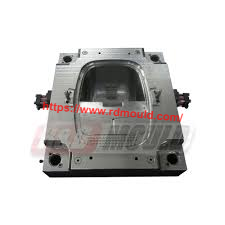
Consumer products live in a harsher commercial environment than industrial parts. A bracket that ships in a crate can get away with a parting line nobody inspects, but a storage container, a food keeper, or a bathroom accessory sits on a shelf beside a dozen competitors under direct light, and shoppers judge it in seconds. That is why a Household Mould is a volume instrument before it is a design exercise: the tool has to produce attractive parts at speed, shift after shift, without the surface going dull or the dimensions drifting.
Steel selection is where that longevity begins. Household moulds run enormous quantities compared with automotive or industrial tooling, so the choice of steel for the cavity, core, and especially the moving components deserves more attention than the price of the block. Sliders, ejector blocks, and angle lift mechanisms absorb the most wear, and the material chosen for those parts determines how long the tool holds its dimensions before maintenance becomes frequent. Surface finish is the other half of the durability story. A hand-polished cavity keeps its shine through millions of cycles in a way that a hastily finished one cannot, and the difference shows up directly in the appearance of the part. Taizhou Huangyan Rui Ding Mould & Plastic Co., Ltd. approaches this through flow analysis during design, technical review of cooling and layout, and deep-hole drilling and high-speed machining during manufacture, with the rdmould line built around the understanding that cosmetic quality in household goods is a manufacturing issue, not a finishing afterthought.
Buyers evaluating a supplier should start with what happens before any steel is cut. A capable toolmaker will ask about the product material, the wall thickness, the intended cavity count, and the expected annual volume, then run a flow analysis to find where defects are likely to appear and propose product changes if needed. Suppliers who accept a drawing without comment are usually planning to solve problems later, at the buyer's expense. Cooling design is the next question worth pressing, since uniform and rapid cooling determines cycle time and, just as importantly, whether parts come out flat and consistent. Buyers should also ask about the guiding system, because a tool with a poor guidance arrangement develops eccentricity over time and produces parting lines that wander.
Function and technology in this category revolve around the movement components. A household mould typically needs sliders, lifters, and ejector systems that work reliably at high cycle counts, and the standard parts chosen for those functions influence how often the tool comes off the press. Copper graphite guide sleeves are worth considering for high-output tools because they maintain alignment through long production runs, which keeps dimensions stable and parting lines clean. The other technical element buyers underrate is validation. A toolmaker who runs a continuous production trial before shipping is testing the whole system, not just the cavity, and that trial usually reveals cooling imbalances or ejection problems that a brief sample run would miss.
Production experience on the buyer's side rarely matches the tool room's expectations. A tool that performs beautifully in a two-hour trial can still create friction on a shop floor running three shifts if the ejection is finicky or the cooling lines require constant attention. Moulds that are easy to maintain, with accessible water lines and standard fasteners, get serviced on schedule; tools that require partial disassembly get neglected. Buyers should ask how the toolmaker documents maintenance points and whether spare movement components are available, because the cost of a stalled press line far exceeds the cost of a spare slider.
Appearance in household goods is a design and tooling decision at the same time. A mould that produces a clean surface and a crisp, well-placed parting line gives the product a finished look that no amount of packaging can manufacture. Texture, gloss, and edge definition all originate in the cavity, and they are set long before the part reaches a shelf. The rdmould approach treats cosmetic quality as something built into the steel and the polishing routine rather than corrected downstream, and buyers can review how the household mould range handles these priorities at https://www.rdmould.com, which is the level of practical detail worth confirming with any Household Mould supplier before a purchase order is signed.